Open Hours: Mon - Sat 8.00 am - 7.00 pm

AGRITECH

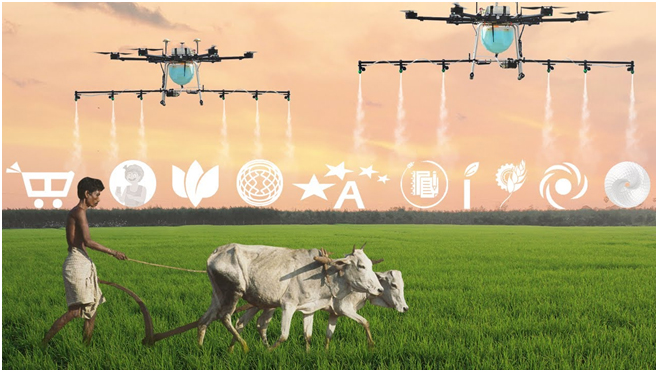
NEST IS PROMOTING AGRITECH among Farmers To Bring REVOLUTIONARY Changes, Possible through Modern Technological and Commercial Approach to Agricultural Sector. Agritech primarily refers to an ecosystem of companies and startup enterprises that are capitalizing on technological advancements to deliver products or services for increasing yield, efficiency – both in terms of time and cost, and profitability for farmers across the agriculture value chain. The various segments within the agritech sector, which support the overall value chain are:

  • Market linkage – farm inputs: Digital marketplace and physical infrastructure to link farmers to inputs.
  • Biotech: Research on plant and animal life sciences and genomics.
  • Farming as a service: Farm equipment for rent on a pay-per-use basis.
  • Precision agriculture and farm management: Use of geospatial or weather data, IOT, sensors, robotics etc. to improve productivity; farm management solutions for resource and field management, etc.
  • Farm mechanization and automation: Industrial automation using machinery, tools and robots in seeding, material handling, harvesting, etc.
  • Farm infrastructure: Farming technologies, such as greenhouse systems, indoor-outdoor farming, drip irrigation, and environmental control, such as heating and ventilation, etc.
  • Quality management and traceability: Post-harvest produce handling, quality check and analysis, produce monitoring, and traceability in storage and transportation.
  • Supply chain tech and output market linkage: Digital platform and physical infrastructure to handle post-harvest supply chain and connect farm output with the customers.
  • Financial services: Credit facilities for input procurement, equipment, etc. as well as insurance or reinsurance of crop.
  • Advisory/ Content: Information platforms online platform for agronomic, pricing, market information.

OVERVIEW OF AGRITECH IN INDIA

The overall agritech ecosystem witnessed a revenue growth of approximately 85 percent during FY 2019-20. An Ernst & Young 2020 study pegs the Indian agritech market potential at US$24 billion by 2025, of which only one percent has been captured so far. A study by Bain & Company pegs this potential at US$35 billion by 2025.

INPUT MARKET LINKAGE AND FARMING AS A SERVICE (FAAS) SEGMENT

This segment is fast picking up pace in India with prominent players being AgroStar and BigHaat, which offer missed call-based service for farmers ordering inputs and equipments along with cash-on-delivery service. These players have been able to eliminate multiple levels of intermediaries by partnering directly with the producers. Some companies also offer services, such as on-demand machinery rental, field levelling, and pesticide spraying, as a part of farming-as-a-service.

SUPPLY CHAIN, POST-HARVEST MANAGEMENT AND OUTPUT MARKET LINKAGE SEGMENT

This segment is the largest contributor to the revenue of the agritech industry in FY 2020 and also witnessed maximum growth among all the segments during the same period. Players in the segment are involved in collection, processing, storage, and logistics and distribution of agriculture produce from farmers to end customers or retailers. Inadequate rural infrastructure and lack of traceability along the supply chain has prompted the intervention of agritech players in the segment.

PRECISION FARMING, ANALYTICS, AND ADVISORY SEGMENT

This segment offering precision farming solutions and advisory services witnessed a growth of approximately 17 percent during FY 2020. The startups in this segment address structural issues arising out of lack of knowledge about scientific farming methods and techniques among famers. These players collect farm specific data about soil, weather conditions, humidity, pests etc. using IoT sensors or geospatial technology and use their analytical capabilities to provide timely insights to the farmers. Agritech startups are also coming up with quality assessment and grading solutions for large agribusinesses and traders. At present, there are approximately 200-250 startups in India dealing in these services.

AGRI FINTECH

This segment comprises of agritech startups offering solutions, such as credit, insurance, warehouse receipt financing, trade financing, etc. Inadequate access to organized credit, collateral, and formal documentation is the biggest challenge faced by farmers. Agritech players are leveraging technologies, such as geo tagging of farm lands and remote crop monitoring, to build risk profiles of farmers and ascertain their credit worthiness. By partnering with banks, NBFCs, and input suppliers, agritech players offer loans at lesser interest rates than unorganized lenders. This segment is still developing in India and has around 20-40 startups at present.

TECHNOLOGY USED IN AGRITECH

Smart Farming

Smart farming has different categories. It’s used after doing a thorough research and inspection of previous conditions.
Weather forecasts to achieve higher yield, automated irrigation, etc are a part of smart farming. It represents the approach to agricultural innovation in the whole by adopting various smart technologies. In a nutshell, smart farming is harnessing collected data, analytics, and machine learning to help farmers make decisions about what to grow and how to feed the planet in a sustainable way.
Drones and Satellites

Would unmanned aerial vehicles or drones be hovering over millions of hectares of farmlands in India? Would they become as commonplace as tractors or power tillers on the ground? In her 2022 Budget speech, Finance Minister Nirmala Sitharaman highlighted the government’s resolve to promote what are being called kisan drones.


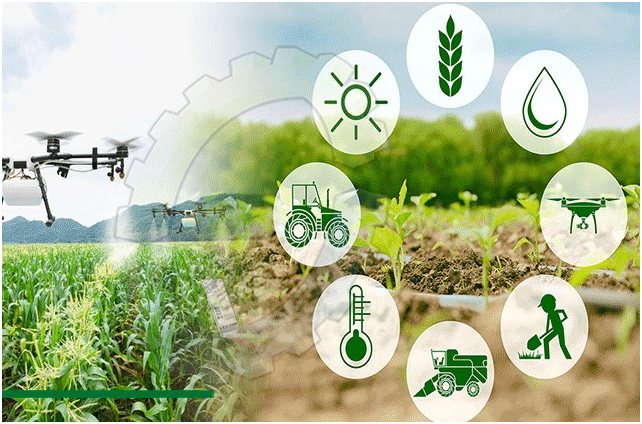
Using drones and satellites allows a farmer to cover large tracts of land quite easily and quickly. Drones and satellites help scan the crops and fields in order to measure and monitor. They also generate terrain maps. The drone market is exploding, on its way to become a multi-billion dollar industry in a short span of time. Besides, drones serve other purposes such as fighting crop disease, pollination, planting seeds, and food security.

IoT Sensors

Agritech develops internet of things (IoT) based software that can track and provide accurate information about the weather, humidity, and current condition of soil. What consumed a lot of farmers’ time and resources is now available instantaneously.

Blockchain

You may be wondering how blockchain technology impacts the agriculture sector. Well, blockchain connects farmers with end-users directly. Consumers can now easily track where, when and how the produce originated. This also cuts out the middlemen.

Vertical Farming

As the name suggests, vertical farming involves crop production using vertically stacked layers. With the application of LED lights to encourage photosynthesis, crops can be grown day and night.

Automation

Automation replaces manual labour with the help of software and hardware solutions to increase speed and reduce loss in quality. Apart from these, there’s biotech, robotics, and big data too. All these advancements have changed the food and agriculture industry for good.

51/103 MOO 4, PHETKASEM ROAD, SAMPRAN NAKHON PHATHOM, THAILAND 73110
Opening Hours:

Mon – Sat: 8.00 am – 7:00 pm

BEST CHOICE PRODUCTS

PRODUCT CATEGORY

WE ARE SOCIAL