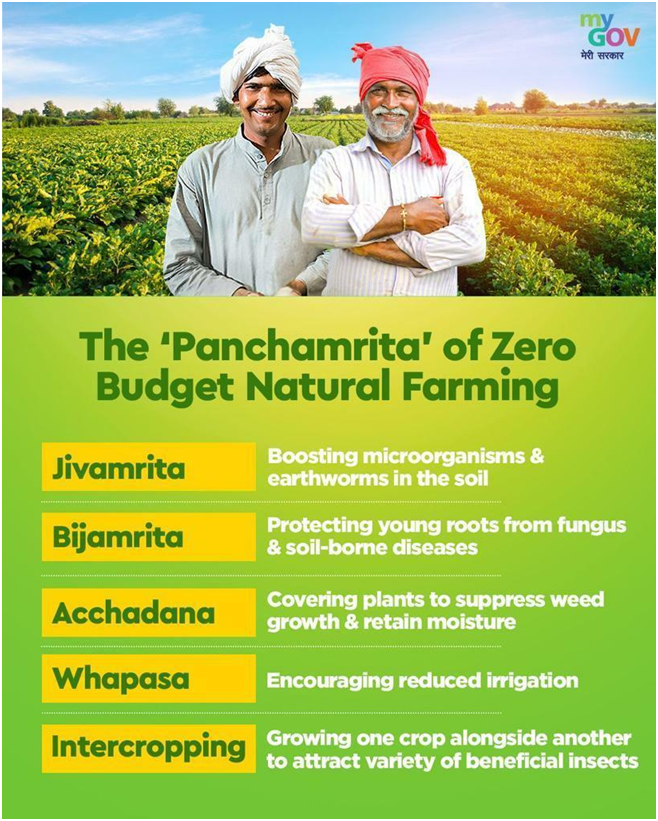
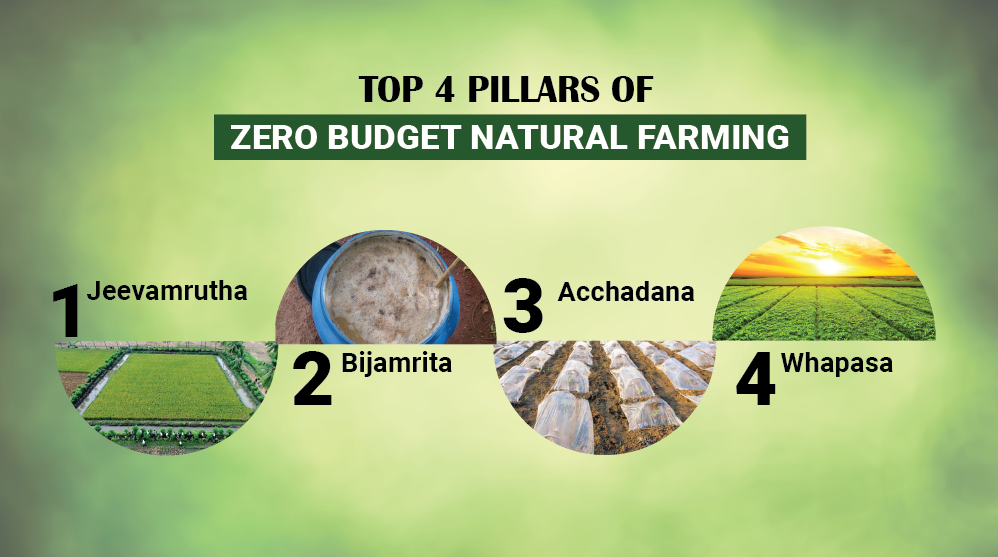
- Jeevamrutha: It is a mixture of fresh cow dung and aged cow urine (both from India’s indigenous cow breed), jaggery, pulse flour, water and soil; to be applied on farmland.
- Bijamrita: It is a concoction of neem leaves & pulp, tobacco and green chilies prepared for insect and pest management, that can be used to treat seeds.
- Acchadana (Mulching): It protects topsoil during cultivation and does not destroy it by tilling.
- Whapasa: It is the condition where there are both air molecules and water molecules present in the soil. Thereby helping in reducing irrigation requirement.
Open Hours: Mon - Sat 8.00 am - 7.00 pm
NEST IS DEDICATED TO PROMOTE ZERO BUDGET NATURAL FARMING ( ZBNF )
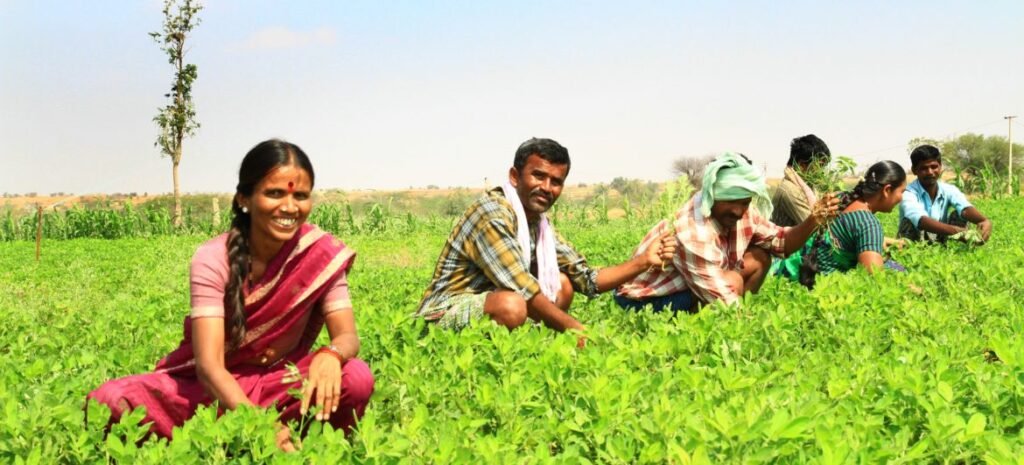
Zero budget natural farming is a method of chemical-free agriculture drawing from traditional Indian practices.
- It was originally promoted by agriculturist Subhash Palekar, who developed it in the mid-1990s as an alternative to the Green Revolution’s methods that are driven by chemical fertilizers and pesticides and intensive irrigation.
- It is a unique model that relies on Agro-ecology.
- It aims to bring down the cost of production to nearly zero and return to a pre-green revolution style of farming.
It claims that there is no need for expensive inputs such as fertilisers, pesticides and intensive irrigation.
Subash Palekar (Indian Agriculturist and Padma Shri Recipient) is the father of Zero Budget Natural Farming (ZBNF). He developed it in the mid-1990s as an alternative to the Green Revolution methods.The points put-forward by Subash Palekar in support of Zero Budget Natural Farming are:Lakhs of farmers are using the technique of Zero Budget Natural Farming in different agro-climatic zones and soil types. To grow a plant, whatever is needed is present in nature. No chemicals are required to grow a plant. An example – Earthworm excreta has seven times more nitrogen than the soil. Large number of small farmers are using this technique as they see Zero Budget Natural Farming as a tool that can free them from debts and defaults. It makes farming both profitable and sustainable.
ZBNF IS BASED ON 4 PILLAR
BENEFITS OF ZBNF ( ZERO BUDGET NATURAL FARMING )
With the rising cost of external inputs (fertilizers and pesticides), which is the leading cause of indebtedness and suicide among farmers. According to the National Sample Survey Office (NSSO) data, almost 70% of agricultural households spend more than they earn and more than half of all farmers are in debt.
- Since in ZBNF there is the need to spend money or take loans for external inputs, the cost of production could be reduced and farming made into a “zero budget” exercise.
This would break the debt cycle for many small farmers and help to envisage the doubling of farmer’s income by 2022.
At a time when chemical-intensive farming is resulting in soil and environmental degradation, a zero-cost environmentally-friendly farming method is definitely a timely initiative.
The ZBNF method promotes soil aeration, minimal watering, intercropping, bunds and topsoil mulching and discourages intensive irrigation and deep ploughing.
It suits all crops in all agro-climatic zones.
Citing the benefits of ZBNF, in June 2018, Andhra Pradesh rolled out an ambitious plan to become India’s first State to practise 100% natural farming by 2024.
Connect With Us

51/103 MOO 4, PHETKASEM ROAD, SAMPRAN NAKHON PHATHOM, THAILAND 73110
Opening Hours:
Mon – Sat: 8.00 am – 7:00 pm
